
PayID pokies, checked line by line: what actually moves, and who verifies it
Instant Ledger reads "PayID pokies" the way an auditor would: trace the payment rail, confirm what is legal, and note exactly where consumer protection stops. This page sets out the verified facts, not marketing claims, and links through to the detail on deposits, withdrawals, legality and safer play.
What "PayID pokies" means, and why the phrase gets searched
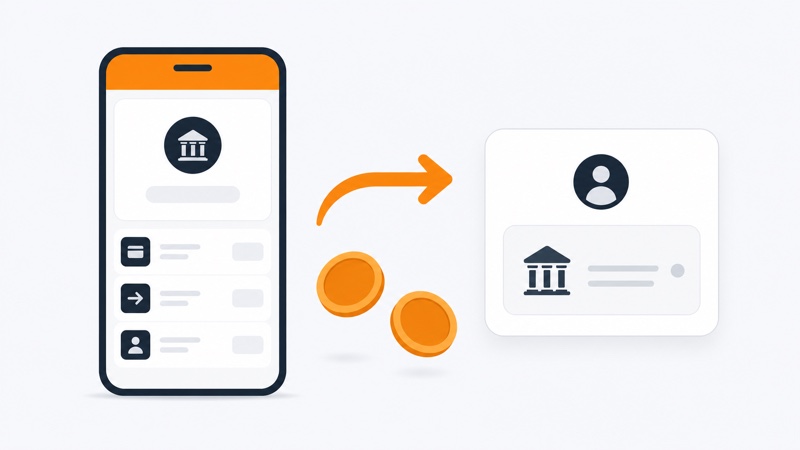
"PayID pokies" is not a product name. It is shorthand for online pokies sites that accept PayID as a deposit method, and sometimes as a withdrawal method too. PayID itself is a bank-run addressing service, not a casino feature; it sits underneath whichever site quotes it at checkout, the same way it sits underneath a rent payment or a split dinner bill. Instant Ledger treats the two halves of that phrase separately, because conflating them is where most confusion starts.
People search the term for two practical reasons: they want a deposit method that does not hand over card numbers, and they want a withdrawal path that is quicker than a bank cheque or a multi-day card refund. Both are reasonable things to want. Neither answers the separate question of whether the site receiving the PayID is licensed to operate in Australia, which is covered in full from Section 06 onward.
Why this differs from a card transaction
A card payment authorises a merchant to charge a card number that stays on file until you remove it. A PayID payment authorises a single transfer to a name-checked account for a fixed amount, initiated by you each time, with nothing stored at the other end for future use. That structural difference is why account-based rails have become the reference point for this kind of guide, and why they are treated differently under the credit and crypto restrictions covered in Section 06.
It also changes who holds the risk if something goes wrong. With a card, a chargeback scheme sits between you and the merchant, and a bank can often reverse a disputed charge weeks after the fact. With a PayID transfer, the money moves directly and immediately; there is no equivalent chargeback right once funds have settled into a correctly name-matched account. That is a reasonable trade for speed and privacy, but it is a trade, and it is fair to state plainly rather than glossing over.
Reading this page as a starting point, not the full record
Each numbered section below links to a dedicated page carrying the worked examples, fee tables and step-by-step detail for that topic. This page exists to set out the verified facts once, in order, so that a reader can see how deposits, withdrawals, legality and safety fit together before going deeper on any single one.
02How PayID actually works, mechanically
PayID launched in February 2018 and runs on the New Payments Platform, operated by NPP Australia, a subsidiary of Australian Payments Plus (AP+) since 2021. Instead of quoting a BSB and account number, you register an identifier, a mobile number, an email address, or an ABN, and link it to your existing bank account. Anyone who wants to pay you enters that identifier instead of the longer bank details.
Two mechanics matter for verification purposes. First, settlement is real-time: NPP transfers usually clear in under a minute, any day of the week, including public holidays, unlike the one-to-three business day window of the older BECS batch system. Second, the paying bank's app displays the registered name attached to the identifier before you confirm the transfer. That name-check is generated by the banking system itself, not supplied by whichever site or person you are paying, which is precisely why it functions as a control rather than a courtesy.
The name-check as a control, not a formality
Treat the confirmation screen as the last verification step in the chain, not a rubber stamp. If a site tells you to expect one business name and your banking app shows a different one, that mismatch is the system doing its job. More than five million PayIDs are now registered nationally, according to AP+ figures, which is exactly why the addressing layer needs a check built in: identifiers can be typed incorrectly, and the name-check exists to catch that before money moves.
NPP transfers also run on a different clearing model to the older Bulk Electronic Clearing System (BECS) that still underpins many standard bank transfers. BECS batches payments and settles them at set times, which is why an ordinary bank transfer can take one to three business days to appear. The NPP instead clears each payment individually as it is sent, which is the mechanical reason a PayID transfer can complete in under a minute rather than overnight. Understanding that distinction helps explain why a PayID deposit and an old-style "direct deposit" bank transfer, despite both being account-to-account, behave so differently in practice.
03Registering and verifying a PayID before you use one
Setting up a PayID takes place entirely inside your existing banking app; there is no separate account to create with a third party. You choose an identifier type, mobile, email, or ABN, confirm it belongs to you, and the bank links it to a nominated account. The process typically takes a couple of minutes and does not require re-verifying your identity with the bank, since that check already happened when the account was opened.
The full registration walkthrough, including which identifier type suits different situations and how to remove a PayID if you change banks, sits on the deposits page. What belongs here is the verification principle: register a PayID with your primary bank, keep the linked account separate from any account you would not want a receiving site to see the balance of, and never register a PayID at the request of a message or link you did not initiate yourself.
One identifier, multiple uses
A single PayID can be quoted to a utility company, a friend, and a pokies site without any of them seeing each other's transactions; the identifier only routes the payment, it does not create a shared ledger. That is convenient, but it also means the same identifier could end up linked to both a legal Australian wagering account and an offshore casino, a distinction that matters for the BetStop discussion in Section 10.
Most banks allow more than one PayID per customer, and some readers prefer to register a second identifier, an email address rather than a mobile number, specifically for discretionary spending such as entertainment or gambling deposits, while keeping their primary mobile-linked PayID for everyday transfers. This is not a compliance requirement, simply a habit some people use to keep a clearer mental separation between accounts, and it costs nothing extra to set up.
04Making a deposit, step by step
A worked example: a player wants to move $180 to a pokies account. They open the deposit page, select PayID, and the site displays a PayID belonging to its payment processor, often a mobile number rather than a business name at first glance. The player copies that identifier into their banking app, enters $180, and the app resolves the identifier to a registered name before showing a final confirmation screen. Once approved, the transfer typically completes in under a minute and the site credits the account, sometimes instantly and sometimes after a short manual reconciliation of a few minutes.
Two failure points recur in this flow: entering the identifier without checking the confirmed name, and assuming a large first deposit will process at the same speed as a small one when the site applies extra manual review. Both are addressed with worked timing detail on the deposits page, which also covers registration, limits, fees and what to do if a bank declines the transfer outright.
A second worked example illustrates the manual-review point directly. A different player sends $2,400 as a first-ever deposit on a new account. The bank-side transfer still clears in under a minute, but the receiving site's own risk system holds the credit for review before the balance appears, commonly somewhere between fifteen minutes and a few hours, because the amount and the "first deposit" flag both raise the transaction's internal risk score. That delay sits entirely on the receiving site's side of the process; the PayID rail itself has already done its job by the time the transfer clears.
What limits actually cap a deposit
Three separate limits can apply to a single deposit attempt: the bank's own daily PayID transfer limit, which varies by institution and account type; any per-transaction cap the receiving site sets on its payment processor; and, occasionally, a temporary limit a bank applies to a new payee while it builds transaction history. A decline is not always the same signal, and distinguishing which limit was hit determines whether the fix is to wait, split the payment, or contact the bank.
05Withdrawals, and the identity checks that come first
Withdrawals run in the opposite direction and almost always trigger identity verification before the first payout, regardless of the payment rail used for deposits. This is a standard know-your-customer step, not something unique to PayID: the site will typically request a photo identity document and confirmation that the withdrawal destination matches the account the original deposit came from.
Once verification clears, PayID withdrawals can move quickly, often within a day, though many sites impose a review or "pending" window before releasing funds, and some retain the right to reverse a withdrawal if a later check flags an issue. The withdrawals page sets out a worked example with typical timings, the documents commonly requested, and the limits and fees that apply once a withdrawal is approved.
Why the account has to match
Requiring withdrawals to return to the same account that funded the deposit is a standard anti-money-laundering control, not an inconvenience specific to any one operator. It closes off a route where deposited funds could otherwise be redirected to a third party, which is the same logic banks apply to reversing mistaken payments.
A worked example clarifies the sequence: a player deposits $650 via PayID, plays for several sessions, and requests a $910 withdrawal that includes winnings. Before the payout is released, the site typically asks for a photo identity document, confirmation of the linked bank account, and sometimes a source-of-funds question if the withdrawal significantly exceeds the original deposit. Once that check clears, the payout itself moves through the same NPP rail as the deposit and can settle in minutes, but the identity check ahead of it, not the transfer, is usually what determines the total wait.
Tiered verification, not a single checkpoint
Identity checks are rarely a single event. A first small withdrawal might only require a document upload, while a much larger cumulative withdrawal over subsequent months can trigger a second, deeper review, sometimes called enhanced due diligence, that asks for proof of address or an explanation of fund sources. This tiered approach mirrors standard anti-money-laundering practice across regulated financial services generally, and it is the reason two withdrawals of similar size can be treated very differently depending on the account's history.
06Is any of this legal? The short, verified answer
Under the Interactive Gambling Act 2001 (IGA), it is illegal to provide or advertise a real-money online casino or pokies service to people in Australia. A 2017 amendment, in force from 13 September 2017, tightened enforcement and prompted more than 230 services to withdraw from the Australian market rather than face penalties. There is no Australian licence for online casino pokies: none exists to hold, so any site offering "PayID pokies" to Australians is operating offshore, without Australian authorisation.
The Australian Communications and Media Authority (ACMA) enforces the IGA and can order internet service providers to block access to illegal offshore sites. More than 1,560 sites have been blocked since blocking began in November 2019. In the 2025–26 reporting period, ACMA investigated 70 services, found breaches at all 70, blocked 49 of them, and had 7 withdraw voluntarily once contacted. Separately, since 11 June 2024, the Interactive Gambling Amendment (Credit and Other Measures) Act 2023 has banned credit cards and digital currency for online wagering in Australia, with penalties of up to $234,750, which is one reason account-based rails such as PayID have become the reference payment method discussed in guides like this one.
Provider-targeted, not player-targeted
The IGA's prohibition is directed at the entity providing or advertising the service, not at the individual placing a bet. Players are generally not prosecuted for using an offshore site. That legal distinction is confirmed on the full legality page, along with what the 2017 amendment changed and how the ACMA blocking process works, sourced from acma.gov.au's online gambling register.
It helps to be precise about what "no Australian licence exists" actually rules out. It is not that operators have failed to apply and been refused; it is that the IGA's framework does not provide any licensing pathway for real-money online casino or pokies services aimed at Australian residents, unlike sports and racing wagering, which can be licensed under separate state and territory regimes. That structural absence, rather than any single refusal, is why every "PayID pokies" site targeting Australians sits outside the regulated system by definition, not as an oversight.
What "unlicensed" means once you are actually a customer
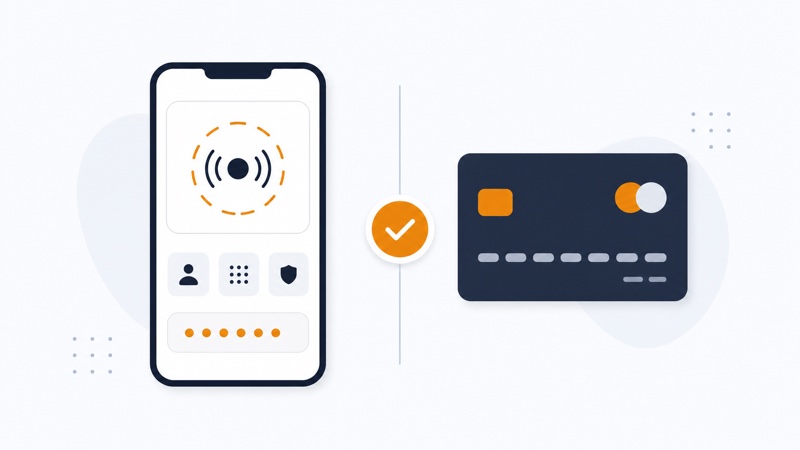
Because no Australian licence covers offshore online pokies, none of the consumer-protection machinery that applies to licensed Australian gambling, dispute resolution schemes, mandated responsible-gambling tools, or a regulator you can complain to, applies to these sites either. A withheld withdrawal, a disputed bonus term, or a closed account with a balance still owing has no Australian authority to escalate to.
This is the single fact most worth separating from the payment-method discussion: PayID being fast and bank-verified says nothing about the licensing status of the site receiving it. A verified, name-checked transfer can still be sent to an operator with no regulator standing behind it. The legality page sets this out in more depth, including what "no Australian consumer protection" concretely means if something goes wrong.
Bank declines and gambling blocks: the other side of verification
Australian banks can decline gambling-related transactions, and some do so automatically by matching the receiving merchant's category code. Several major banks, including CommBank, NAB, Westpac and ANZ, offer a customer-controlled gambling block that can be switched on inside the banking app, typically stopping card and, in some cases, transfer payments to merchants coded as gambling.
A gambling block is matched against merchant category, not against any text you type into a payment reference, so relabelling a transfer does not bypass it. If a PayID payment is declined without explanation, the most reliable next step is to contact the bank directly rather than retry the payment repeatedly, since repeated attempts can sometimes trigger a fraud hold on top of the original decline.
Reading a decline correctly
Not every declined PayID payment is a gambling block. The same on-screen message can also signal a temporary daily-limit breach, a fraud-detection hold triggered by an unfamiliar payee, or, less often, a technical fault on the receiving side. A customer who has not opted into a gambling block themselves and still sees a payment fail is better served ringing the bank than assuming the cause, since the fix differs sharply depending on which of those three it actually is.
Key takeaways
- PayID is a bank-run identifier service on the NPP; it never gives a pokies site your card details.
- There is no Australian licence for online casino pokies, so "PayID pokies" sites operate offshore.
- ACMA has blocked 1,560+ offshore sites since November 2019 and continues active enforcement.
- Credit cards and crypto have been banned for online wagering in Australia since 11 June 2024.
- Banks can and do decline gambling transactions; a customer-set gambling block is available at several major banks.
- BetStop covers licensed Australian wagering only, not offshore casino or pokies sites.
PayID measured against the alternatives
PayID is one of several payment routes that have appeared in this space, and each carries a different verification profile. The table below compares them on the dimensions that matter for a compliance-minded reader: whether the method is account-based or card-based, whether it is currently permitted for online wagering, and its typical settlement speed.
| Method | Type | Wagering status | Typical speed |
|---|---|---|---|
| PayID | Account-based (NPP) | Permitted | Under 60 seconds |
| PayTo | Account-based, pre-authorised (NPP) | Permitted, less common | Real-time |
| Debit card | Card-based | Permitted | Instant to same-day |
| Credit card | Card-based | Banned since 11 Jun 2024 | N/A |
| Digital currency | Crypto | Banned since 11 Jun 2024 | N/A |
| POLi | Bank redirect | Discontinued (closed 2022) | N/A |
The full comparison, including fee structures and the pros and cons of each method for deposits versus withdrawals, is on the alternatives page. The point worth carrying forward here is narrower: account-based rails verify an identity-linked account at both ends, which is structurally different from a card number or an anonymous wallet address, and that difference is exactly why regulators have treated the two categories differently since June 2024.
Where PayTo fits
PayTo is a newer NPP service that sets up a pre-authorised agreement, allowing a business to draw payments under agreed terms rather than requiring a fresh push transfer each time. It is a different mechanism from PayID and is worth understanding precisely because it can look similar at a glance but carries a standing authority that PayID does not.
10Safer play, and where the self-exclusion tools actually reach
Gambling on offshore pokies sites is an activity for adults 18 and over, and account-based verification does not reduce that age requirement or replace responsible-play safeguards. BetStop, the National Self-Exclusion Register, launched on 21 August 2023 and allows a person to exclude themselves from licensed Australian interactive wagering services, sports and racing betting operators holding an Australian licence. BetStop does not cover offshore casino or pokies sites, because those sites are not licensed in Australia and fall outside the register's reach. Stating that plainly matters more than glossing over it.
For anyone concerned about their own play or someone else's, the practical controls that do apply are bank-side: a customer-set gambling block, self-set transaction limits, and, if needed, a conversation with the bank about closing the linked PayID account entirely. None of these are a workaround for a self-exclusion; they are separate tools that address separate parts of the same problem. Full detail on warning signs, the tools that are genuinely available, and how BetStop's own registration process works sits on the safe and responsible play page.
If gambling is causing harm, Gambling Help Online is free, confidential and available 24 hours a day on 1800 858 858, with further self-help resources at gamblinghelponline.org.au. Instant Ledger's position is that no payment method, however fast or well verified, is a substitute for that support when it is needed.
Warning signs worth acting on early
Chasing a loss with a deposit noticeably larger than usual, opening a second bank account or a fresh PayID specifically to get around a block already set on a primary account, and losing track of how much has moved through PayID over a week rather than a single session are three signs worth treating as prompts to pause, not as ordinary variance. None of these require things to have become severe before acting on them; a self-set limit or a call to Gambling Help Online is available at any stage.
How we researched this
Figures on PayID, the NPP and PayID registration numbers are drawn from Australian Payments Plus (AP+) and the official payid.com.au explainer. Legal and enforcement detail is drawn from the Interactive Gambling Act 2001, its 2017 amendment, the Interactive Gambling Amendment (Credit and Other Measures) Act 2023, and ACMA's public register of blocked services. Self-exclusion detail is drawn from BetStop's official documentation. Bank gambling-block claims reflect published policies from CommBank, NAB, Westpac and ANZ. All figures were checked in July 2026 and are updated when the underlying source changes.
Frequently asked questions
Does a PayID payment leave a different paper trail than a card payment?
Yes. A PayID transfer is a direct bank-to-bank NPP payment tied to your account, so it appears on your bank statement as a transfer to the payee's registered name. A card payment instead shows a merchant descriptor, which can be harder to reconcile later if you need records for a bank dispute or a self-audit of spending.
Can a pokies site show a different PayID name to the one my bank displays?
No. The name-check shown before you confirm a payment is generated by your own bank from the NPP addressing service, not by the site you are paying. If the confirmed name does not match what the site told you to expect, treat that mismatch as a reason to stop and check, not to proceed.
If I use PayID for a deposit, can the receiving site ever debit my account again later without my action?
No. A standard PayID payment is a one-off push transfer you initiate each time; it does not create a standing authority. That is different from PayTo, which does set up a pre-authorised agreement a business can draw on until you cancel it, so check which service is actually being described.
Does closing my PayID stop a gambling site from contacting me?
Removing a PayID from your banking app stops that identifier from receiving or sending payments, but it does not delete any account you hold with the site itself. Closing the site account, and separately setting a bank-side gambling block, are the two additional steps most people miss.
Is a bank required to tell me why it declined a payment to a gambling merchant?
Banks generally are not obliged to give a detailed reason at the point of decline, though many display a short code or message such as "blocked category". If you have not opted into a gambling block yourself, contacting your bank directly is the fastest way to find out whether the decline was a rule, a fraud check, or a technical fault.
Does ACMA blocking an offshore site mean my money there is protected?
No. An ACMA block targets the website's accessibility from Australian internet connections; it is an enforcement action against an illegal service, not a consumer-protection scheme covering funds already held with that operator. If a blocked site later becomes unreachable, there is no Australian regulator you can lodge a deposit-recovery claim with.
Can I use one PayID for both a legal Australian wagering account and an offshore pokies site?
Technically the same identifier can be quoted to either type of site, but doing so mixes an activity BetStop can cover (licensed wagering) with one it cannot (offshore casino play). If self-exclusion is part of your plan, treat the two as separate problems requiring separate controls, not one PayID decision.
Does a bank's gambling block also cover transfers I label myself, like "rent" or "savings"?
No. Bank gambling blocks work by matching the receiving merchant's registered category code, not by reading any description or reference text you type into the transfer. Relabelling a payment does not change the underlying merchant category, so a genuine block still applies regardless of what you write in the reference field.